CO-AUTHORED WITH Nicola Jenkin, Director at Pinpoint Sustainability and Research Associate at the Sustainability Institute
WHAT IS FOOD WASTE?
FOOD WASTE IS FOOD THAT HAS GONE THROUGH THE FOOD SUPPLY CHAIN WHICH GETS DISCARDED DESPITE BEING FIT FOR CONSUMPTION.
FOOD WASTE IS FOOD THAT HAS GONE THROUGH THE FOOD SUPPLY CHAIN WHICH GETS DISCARDED DESPITE BEING FIT FOR CONSUMPTION.
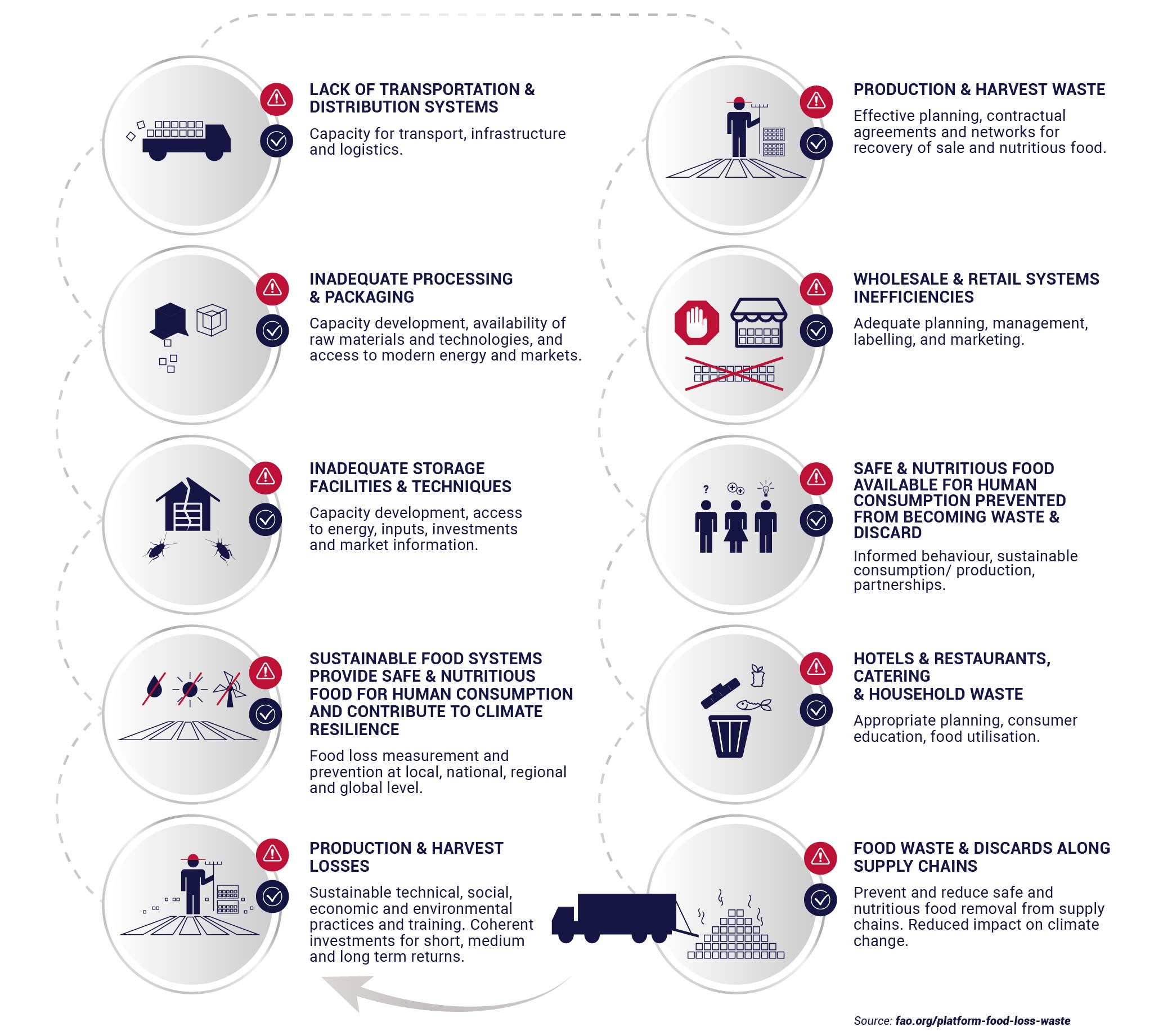
WASTE CAN OCCUR FROM AS EARLY AS AT FARM LEVEL AND CONTINUE RIGHT THROUGH TO THE CONSUMER LEVEL.
WASTE CAN OCCUR FROM AS EARLY AS AT FARM LEVEL AND CONTINUE RIGHT THROUGH TO THE CONSUMER LEVEL.
WHY FOOD WASTE NEEDS TO BE REDUCED
Reducing food losses and waste is a critical part of making food systems more sustainable and resultantly more resilient, which will help promote a more affordable and healthier food offering for consumers, in line with the European Union’s Farm to Fork strategy.
The Virtuous Cycle approach supports this goal fully by:
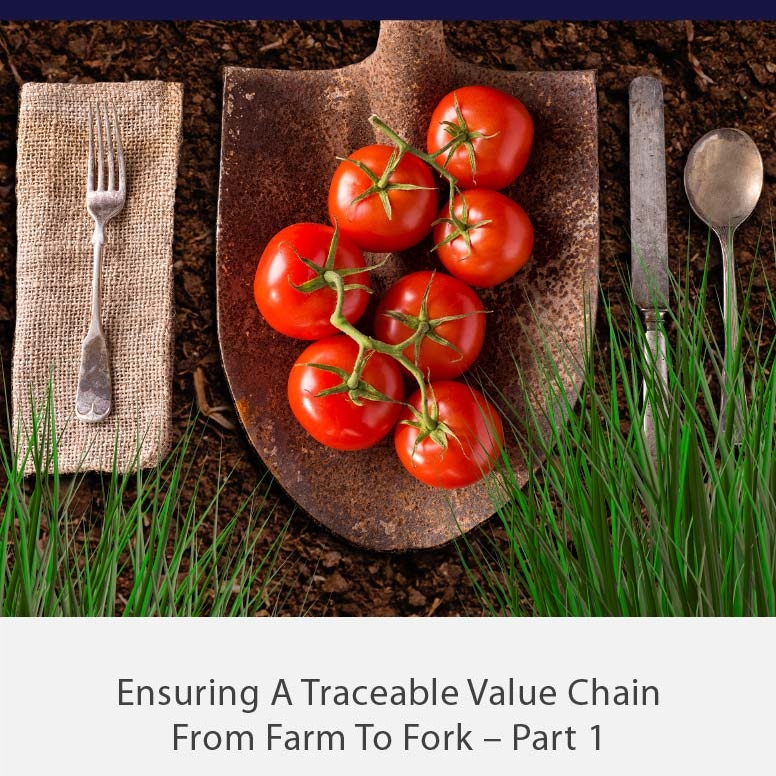
PART 1 Ensuring a Traceable Value Chain from Farm to Fork through Value Chain Visualisation.
Reducing food losses and waste is a critical part of making food systems more sustainable and resultantly more resilient, which will help promote a more affordable and healthier food offering for consumers, in line with the European Union’s Farm to Fork strategy.
The Virtuous Cycle approach supports this goal fully by:
PART 1 Ensuring a Traceable Value Chain from Farm to Fork through Value Chain Visualisation.
Food waste often goes undetected or unaddressed because the quantum of losses and waste in the broader picture is not properly understood. Without a clear understanding of all the contributing factors, food waste cannot be reduced or prevented.
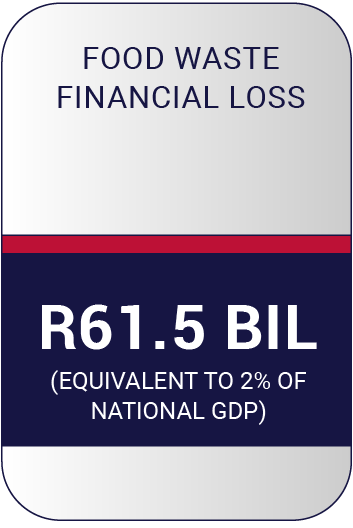
Ultimately, the cost of waste is factored into final food prices to compensate for losses.
RECENT FIGURES ESTIMATED BY THE CSIR
RECENT FIGURES ESTIMATED BY THE CSIR
A CSIR (Council for Scientific and Industrial Research) study1 has revealed that 10.3 million tonnes of food and beverages are wasted each year in South Africa, about a third of the food available.
A CSIR (Council for Scientific and Industrial Research) study1 has revealed that 10.3 million tonnes of food and beverages are wasted each year in South Africa, about a third of the food available.
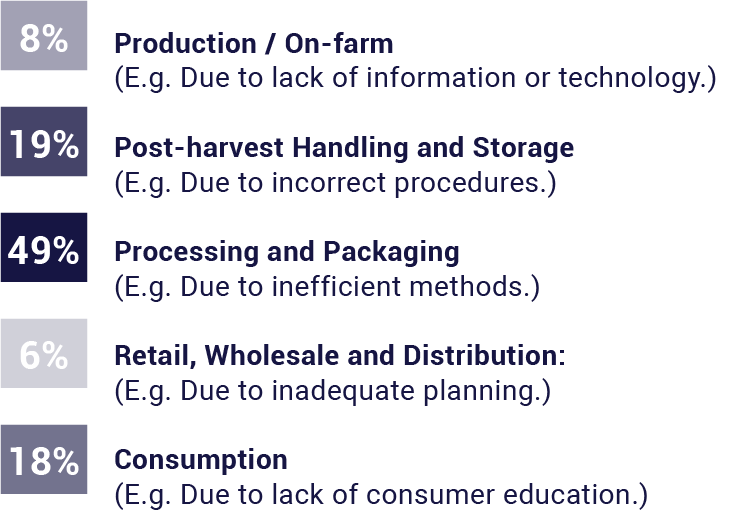
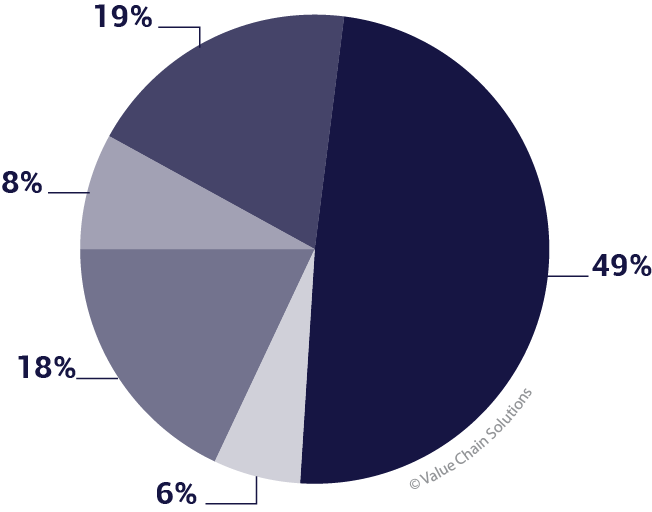
PERCENTAGE LOSSES AT EACH STAGE OF THE VALUE CHAIN ARE AS FOLLOWS
PERCENTAGE LOSSES AT EACH STAGE OF THE VALUE CHAIN ARE AS FOLLOWS
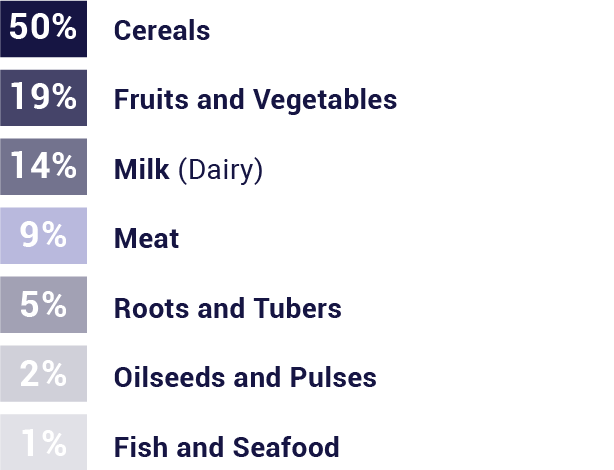
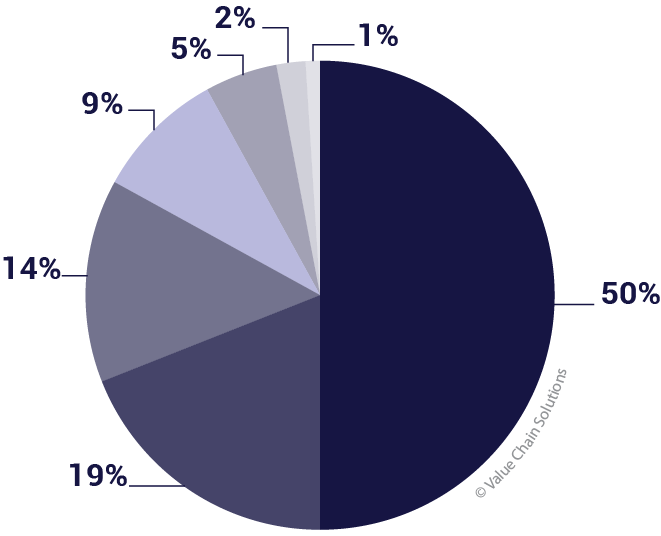
PERCENTAGE FOOD WASTE QUANTITIES PER COMMODITY GROUP (ALONG ALL STAGES OF THE VALUE CHAIN)
PERCENTAGE FOOD WASTE QUANTITIES PER COMMODITY GROUP (ALONG ALL STAGES OF THE VALUE CHAIN)
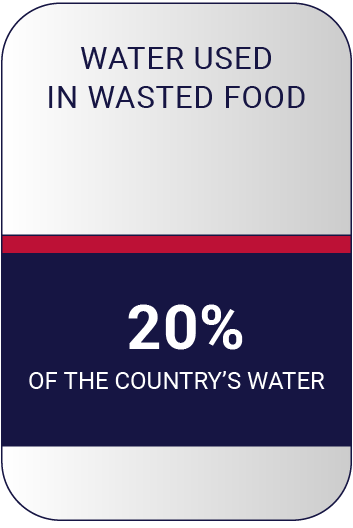
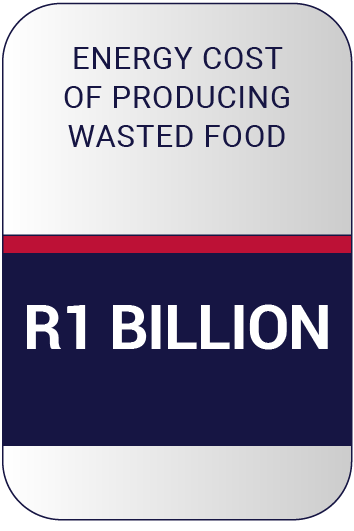
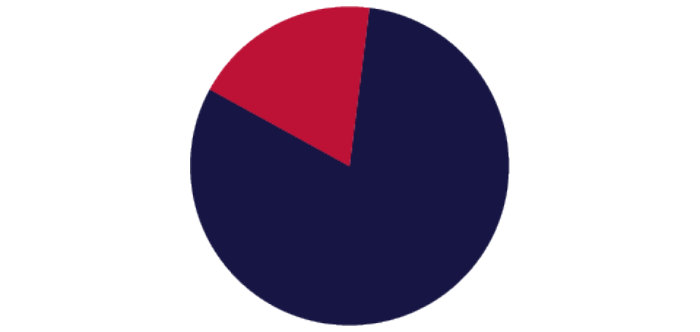
Furthermore, the environment also suffers as discarded food ultimately rots, producing methane gas which contributes to climate change. In addition, approximately a quarter of all the water used for agriculture is indirectly lost through food waste every year.
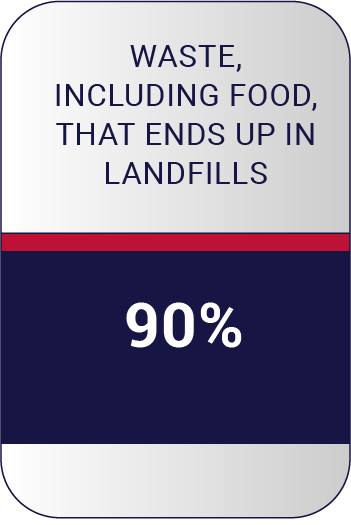
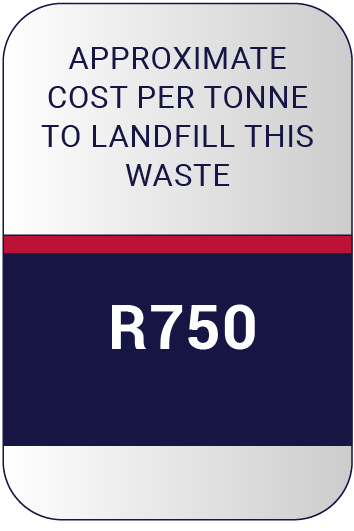
ALARMING STATISTICS | SOUTH AFRICA
ALARMING STATISTICS
SOUTH AFRICA
Financial and environmental issues associated with food waste are further compounded by the social context within which food waste is happening in South Africa. Edible, nutritious surplus food could be distributed to those in need, or converted into secondary products, such as oils, soups and sauces.
Financial and environmental issues associated with food waste are further compounded by the social context within which food waste is happening in South Africa. Edible, nutritious surplus food could be distributed to those in need, or converted into secondary products, such as oils, soups and sauces.
SOCIAL FACTS
9.34 MILLION PEOPLE SUFFER FROM
ACUTE FOOD INSECURITY IN SOUTH AFRICA.2
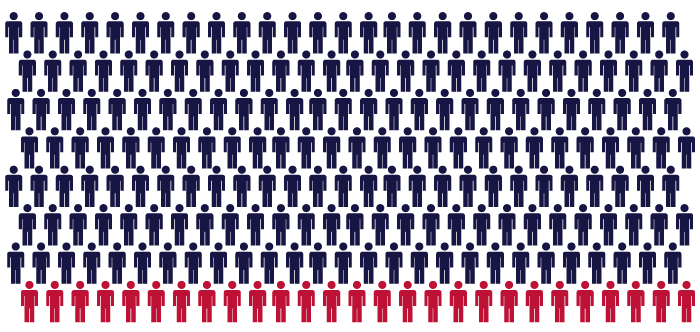
20% OF SOUTH AFRICA’S HOUSEHOLDS HAVE INADEQUATE ACCESS TO FOOD.3
THE CHALLENGE
REDUCING FOOD LOSSES AND WASTE THROUGHOUT THE VALUE CHAIN
On 29 September 2020, the Consumer Goods Council of South Africa (CGCSA) launched the South African Food Loss and Waste Voluntary Agreement. The agreement (developed by CGCSA in partnership with the Department of Trade, Industry and Competition (DTIC) and the Department of Environment, Forestry and Fisheries (DEFF) and co-funded by the European Union through the SA-EU Dialogue Facility) intends to respond to this urgent challenge through a public, collaborative declaration of intent to reduce food and beverage waste and redistribute or enable markets for nutritious surplus food.
To date, some of South Africa’s main retailers and food manufacturers have signed the agreement. This means they have committed to:
On 29 September 2020, the Consumer Goods Council of South Africa (CGCSA) launched the South African Food Loss and Waste Voluntary Agreement. The agreement (developed by CGCSA in partnership with the Department of Trade, Industry and Competition (DTIC) and the Department of Environment, Forestry and Fisheries (DEFF) and co-funded by the European Union through the SA-EU Dialogue Facility) intends to respond to this urgent challenge through a public, collaborative declaration of intent to reduce food and beverage waste and redistribute or enable markets for nutritious surplus food.
To date, some of South Africa’s main retailers and food manufacturers have signed the agreement. This means they have committed to:
Reducing food waste in South Africa by 50% by 2030.
Adopting the food utilisation hierarchy (which prioritises food waste reduction) and secondly the redistribution of edible, nutritious surplus food for human consumption and enabling secondary markets for surplus food.
Identifying food surplus and waste management solutions that respond to a circular economy and sustainable food systems agenda.
THE SOLUTION
IDENTIFY AND REDUCE OR ELIMINATE WASTE THROUGH THE FIVE VIRTUOUS CYCLE STEPS AND THEIR VARIOUS DATA SOLUTIONS AND TOOLSETS.
Once the problem areas are identified and understood they can be quantified and the proper interventions can occur.
VISUALISATION
A complete view of the value chain enables you to see and understand potential areas of waste.
A complete view of the value chain enables you to see and understand potential areas of waste.
Next, you can scale your findings to multiply value benefits across multiple product categories. For example, techniques used to reduce losses in one fruit can be applied to the entire fruit family, whether that be improvements made to the processing, transport or storing process.
Next, you can scale your findings to multiply value benefits across multiple product categories. For example, techniques used to reduce losses in one fruit can be applied to the entire fruit family, whether that be improvements made to the processing, transport or storing process.
Smart capital investment back into the value chain that leverages the knowledge gained can further reduce losses which will benefit people and the environment.
Smart capital investment back into the value chain that leverages the knowledge gained can further reduce losses which will benefit people and the environment.
The term hotspot is used in the food waste landscape to refer to areas along or within the value chain with the greatest negative impact. This could be within a singular product’s value chain, or it could be the largest area of significance within a business’s product or brand portfolio. Once the hotspots have been identified they can be investigated to determine the causes of waste, whether it be technical or behavioural, for example. Solutions can then be created for and focused on these areas to drive cost reduction and reduce environmental impact.
The term hotspot is used in the food waste landscape to refer to areas along or within the value chain with the greatest negative impact. This could be within a singular product’s value chain, or it could be the largest area of significance within a business’s product or brand portfolio. Once the hotspots have been identified they can be investigated to determine the causes of waste, whether it be technical or behavioural, for example. Solutions can then be created for and focused on these areas to drive cost reduction and reduce environmental impact.
SOURCES:
1. Oelofse, S. et al. (2021). Increasing Reliable, Scientific Data and Information on Food Losses and Waste in South Africa 2. IPC. (2021). South Africa Impact of COVID-19 on Food Security 3. Statistics South Africa. (2019). The Extent of Food Security in South Africa
We use cookies on our website to give you the most relevant experience by remembering your preferences and repeat visits. By clicking “Accept All”, you consent to the use of ALL the cookies. However, you may visit "Cookie Settings" to provide a controlled consent. Click here to read our Privacy Policy.
This website uses cookies to improve your experience while you navigate through the website. Out of these, the cookies that are categorized as necessary are stored on your browser as they are essential for the working of basic functionalities of the website. We also use third-party cookies that help us analyze and understand how you use this website. These cookies will be stored in your browser only with your consent. You also have the option to opt-out of these cookies. But opting out of some of these cookies may affect your browsing experience.
Necessary cookies are absolutely essential for the website to function properly. These cookies ensure basic functionalities and security features of the website, anonymously.
Cookie
Duration
Description
cookielawinfo-checkbox-analytics
11 months
This cookie is set by GDPR Cookie Consent plugin. The cookie is used to store the user consent for the cookies in the category "Analytics".
cookielawinfo-checkbox-functional
11 months
The cookie is set by GDPR cookie consent to record the user consent for the cookies in the category "Functional".
cookielawinfo-checkbox-necessary
11 months
This cookie is set by GDPR Cookie Consent plugin. The cookies is used to store the user consent for the cookies in the category "Necessary".
cookielawinfo-checkbox-others
11 months
This cookie is set by GDPR Cookie Consent plugin. The cookie is used to store the user consent for the cookies in the category "Other.
cookielawinfo-checkbox-performance
11 months
This cookie is set by GDPR Cookie Consent plugin. The cookie is used to store the user consent for the cookies in the category "Performance".
viewed_cookie_policy
11 months
The cookie is set by the GDPR Cookie Consent plugin and is used to store whether or not user has consented to the use of cookies. It does not store any personal data.
Functional cookies help to perform certain functionalities like sharing the content of the website on social media platforms, collect feedbacks, and other third-party features.
Performance cookies are used to understand and analyze the key performance indexes of the website which helps in delivering a better user experience for the visitors.
Analytical cookies are used to understand how visitors interact with the website. These cookies help provide information on metrics the number of visitors, bounce rate, traffic source, etc.