WAY #1: UNDERSTAND HOW
YOUR VALUE CHAIN WORKS,
WHO IS INVOLVED AND WHY.

WAY #1: UNDERSTAND HOW YOUR VALUE CHAIN WORKS, WHO IS INVOLVED AND WHY.

IN OUR LATEST INSIGHTS PIECE, WE EXPLORE THE FIRST WAY IN WHICH VALUE CHAIN COLLABORATION SUPPORTS THE VISIBILITY AND RESILIENCE OF THE VARIOUS SUPPLY CHAINS ORGANISATIONS DEPEND ON DAILY.

IN OUR LATEST INSIGHTS PIECE, WE EXPLORE THE FIRST WAY IN WHICH VALUE CHAIN COLLABORATION SUPPORTS THE VISIBILITY AND RESILIENCE OF THE VARIOUS SUPPLY CHAINS ORGANISATIONS DEPEND ON DAILY.

#1
UNDERSTAND HOW YOUR VALUE CHAIN WORKS,
WHO IS INVOLVED AND WHY.

#1
UNDERSTAND HOW YOUR VALUE CHAIN WORKS, WHO IS INVOLVED AND WHY.

To facilitate focused collaboration, it is key to achieve a common understanding of how the value chain works. This ensures a joint understanding of risks and opportunities and facilitates the identification of the required insights to drive focused collaboration between value chain partners, along with the facts and data required to achieve those insights. The common goal should and must always be to avoid different versions of the truth as early on in the process as possible.

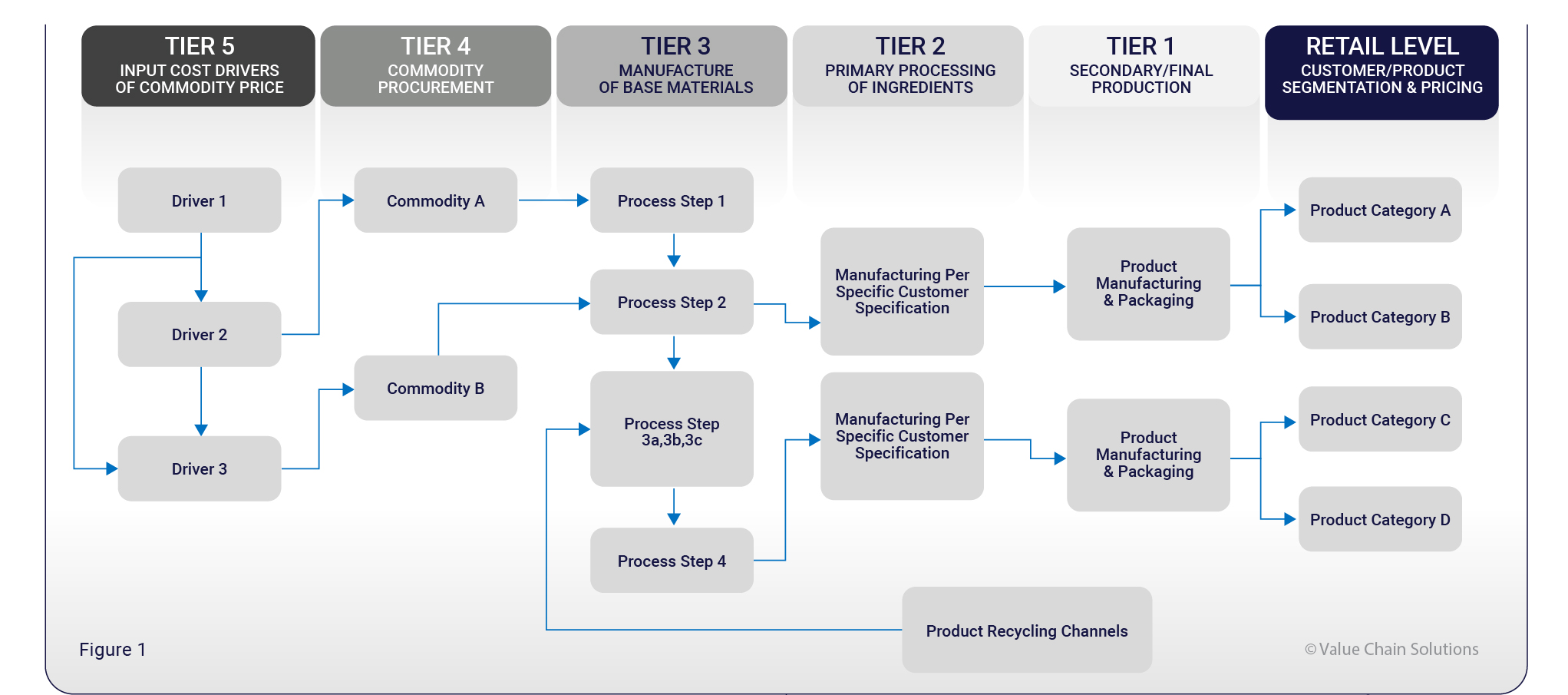
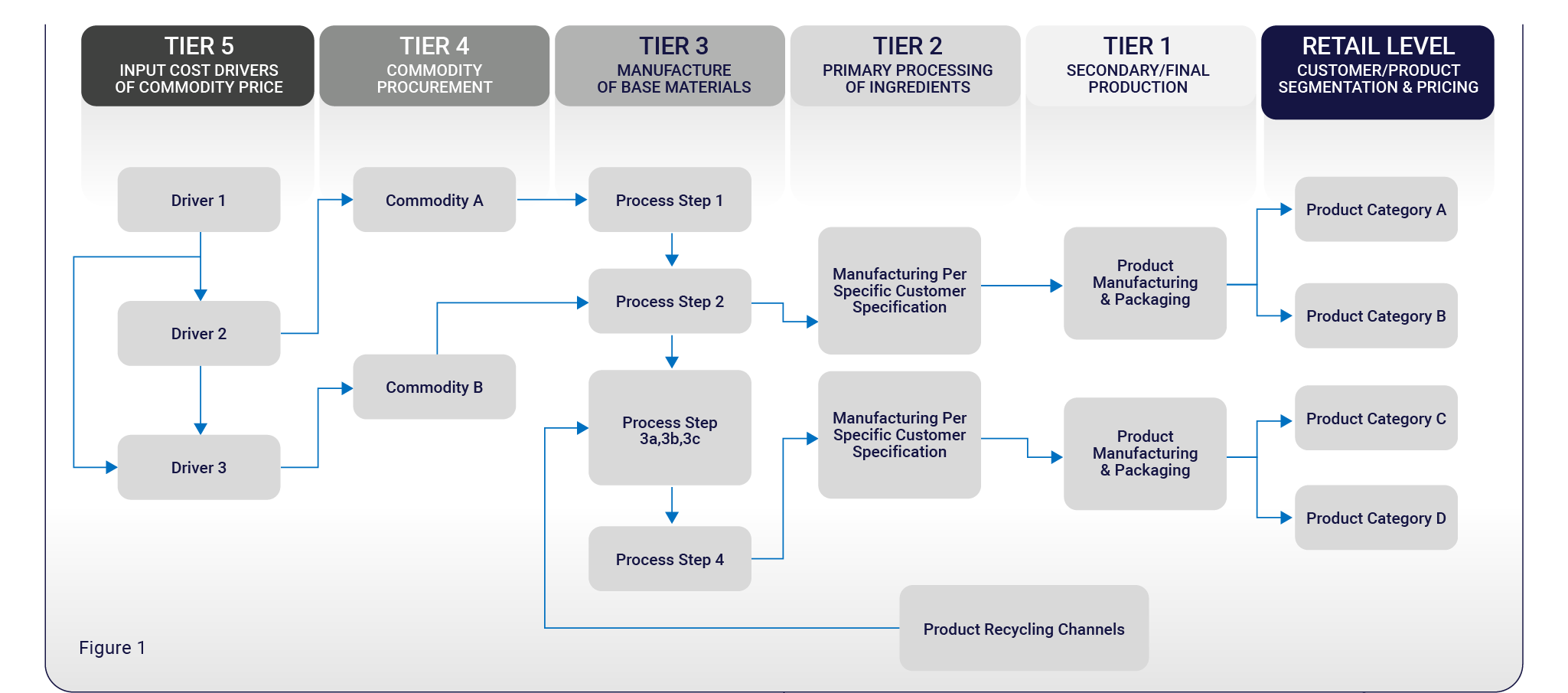
Value chain that consists of 6 tiers, from Retail Customer to Commodity Cost Drivers.

As illustrated in Figure 1, the first step in the process is to map the value chain and relationships to drive a common understanding of the relationships and dynamics at play. In this example, the value chain consists of 6 Tiers, from Retail Customer to Commodity
Cost Drivers:

RETAIL/CUSTOMER LEVEL:

The focus is on understanding the current as well as targeted product categories
in scope as well as the targeted customer base and price dynamics.

TIER 1

The focus is on the final production of the packaged product and configuration and to ensure all parties understand dynamics such as the scope of the intended product changes as well as costing and volume assumptions.

TIER 2

The focus is on the value-adding processes which produce the subcomponents of the product at primary production level, such as production of packaging material or substrates or the preassembly of components.

TIER 3

The focus is on the processes which turn commodities into function-specific base materials for further manufacturing.

TIER 4

The focus is on the characteristics and drivers of basic commodity pricing and sourcing options.

TIER 5

The focus is on the cost and price drivers of commodities which normally form the basis of the value chain costs.

Mapping and understanding the suitable level of detail, from customer to base inputs,
drives a common understanding of opportunities and risks between value chain partners
as the first important step to collaborate on win-win opportunities and risks impacting
the value chain.

Mapping and understanding the suitable level of detail, from customer to base inputs, drives a common understanding of opportunities and risks between value chain partners as the first important step to collaborate on win-win opportunities and risks impacting the value chain.

IN OUR NEXT INSIGHTS PIECE, WE WILL TAKE A CLOSER LOOK AT WHY OPEN AND STRONG COMMUNICATION BETWEEN VALUE CHAIN PARTNERS IS KEY TO ACHIEVE WIN-WIN OUTCOMES AND RESPONSIVENESS.