MICHAEL DAY – Value Chain Solutions Director – RECENTLY SPOKE AT THE WILLOWTON GROUP SUSTAINABILITY CONFERENCE.
IN THIS INSIGHTS PIECE, WE HIGHLIGHT THE MAIN POINTS SHARED IN HIS PRESENTATION, ALONG WITH HELPFUL GRAPHS.
MICHAEL DAY – Value Chain Solutions Director – RECENTLY SPOKE AT THE WILLOWTON GROUP SUSTAINABILITY CONFERENCE.
IN THIS INSIGHTS PIECE, WE HIGHLIGHT THE MAIN POINTS SHARED IN HIS PRESENTATION, ALONG WITH HELPFUL GRAPHS.
Published September 2022
AT A GLANCE
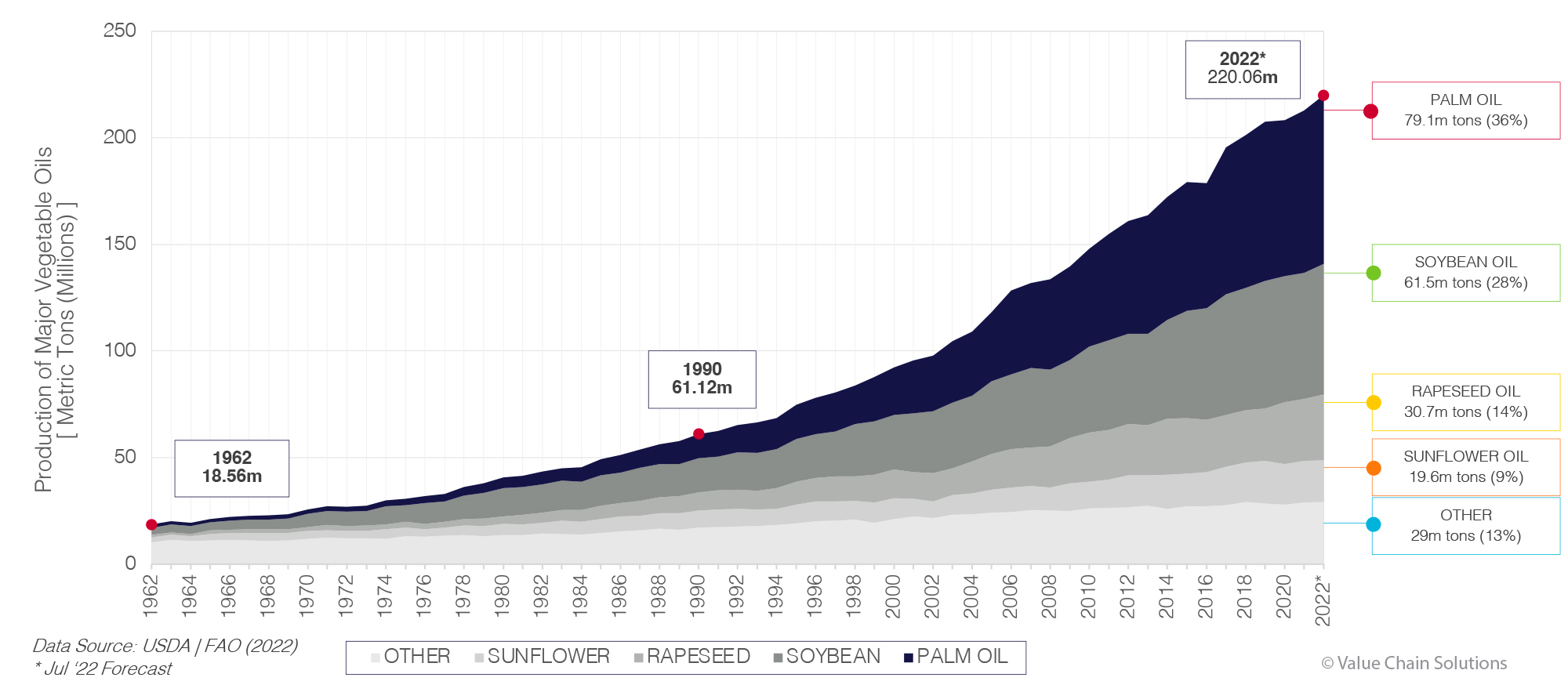
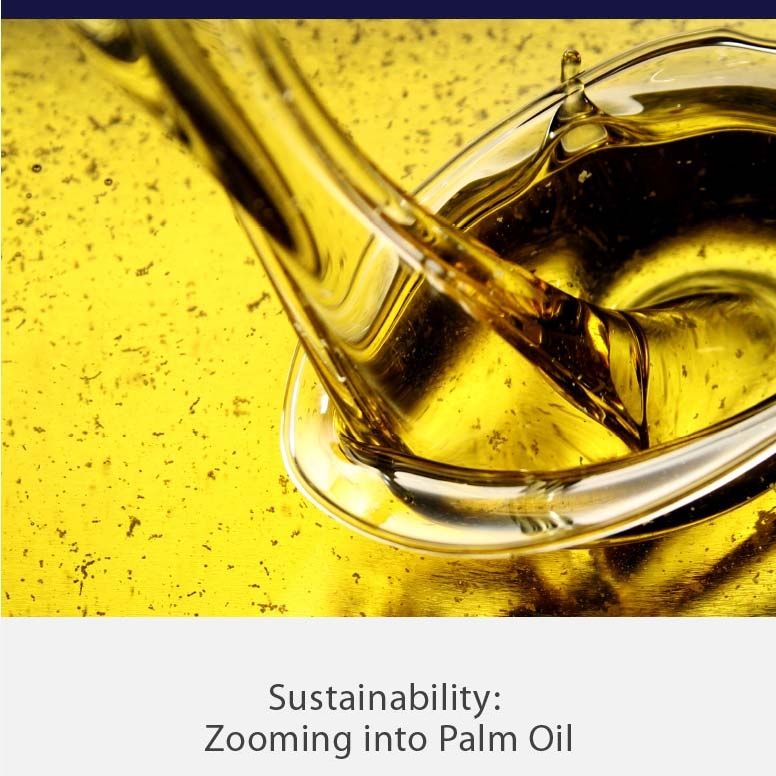
The demand for vegetable oils continues to grow along with the world population, which was at 5.26 billion in 1990 and 7.81 billion in 2021. The production of palm oil – the most widely used vegetable oil in the world – has increased rapidly over the past 50 years yet sustainable sourcing is an increasingly complex problem.
GLOBAL VEG OIL HISTORICAL SUPPLY BREAKDOWN
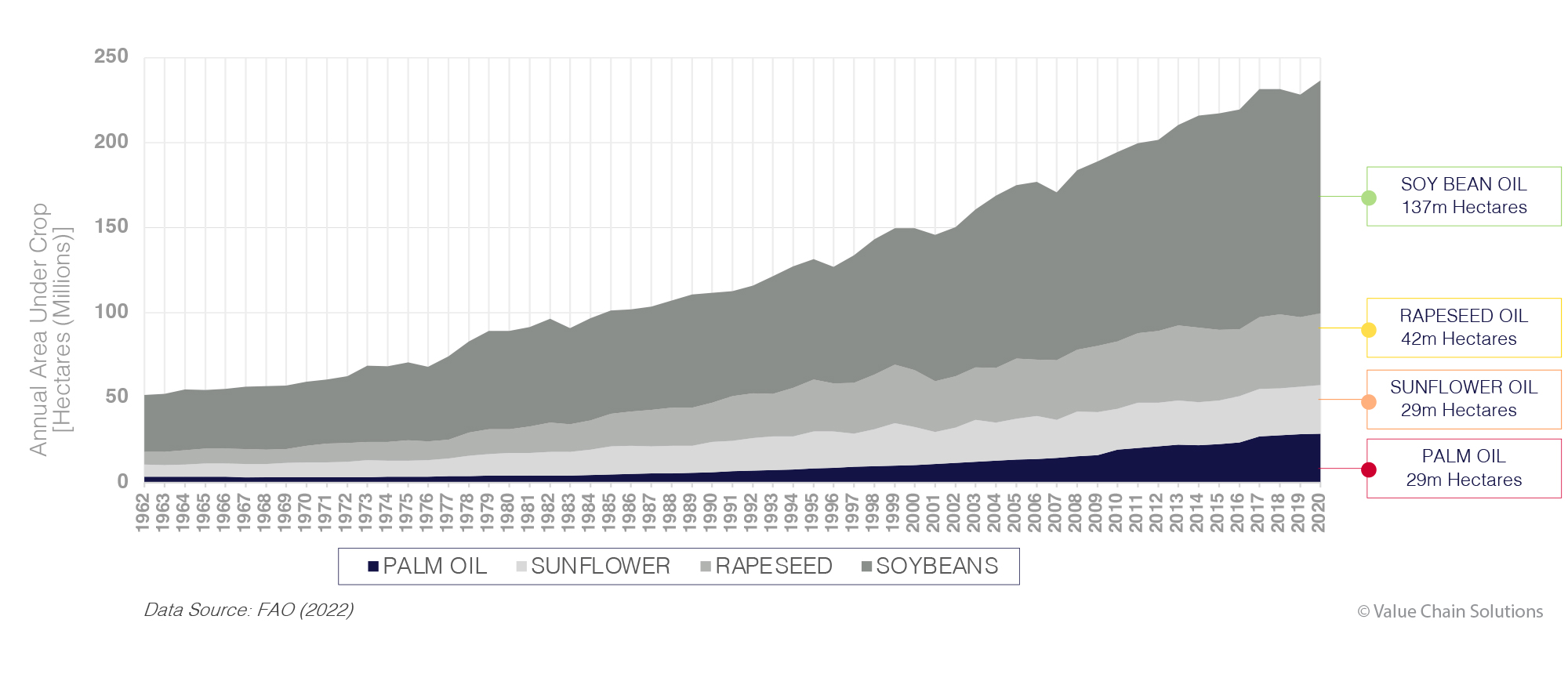
Oil palm plantations currently cover more than 29 million hectares of the earth’s surface. While it can be produced sustainably, its expansion in certain areas has led to deforestation, biodiversity loss, peatland destruction and potential human rights violations.
HISTORICAL HECTARAGE UNDER CROP: MAJOR OILSEEDS
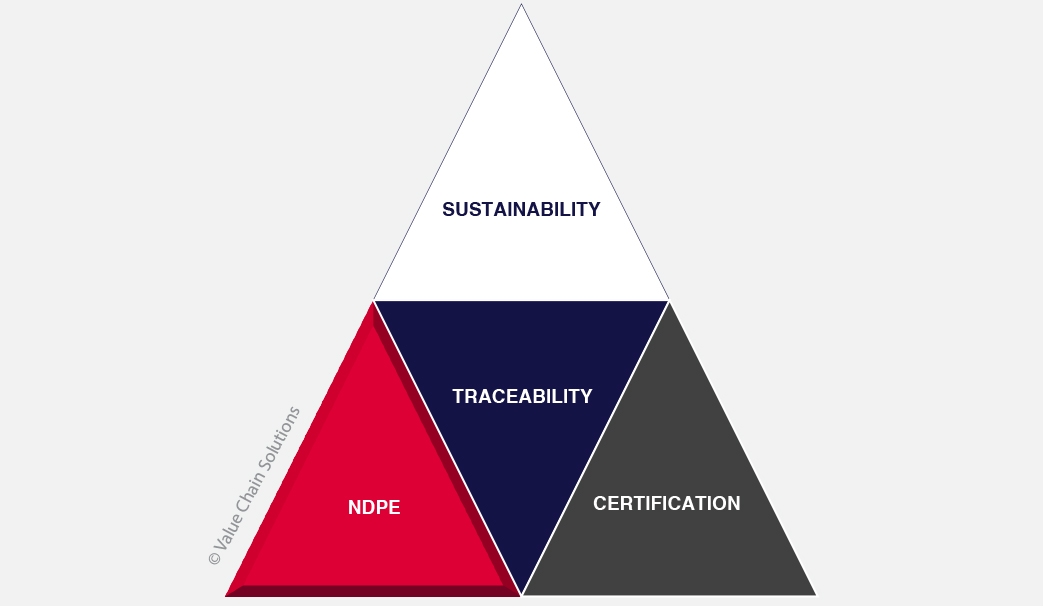
UNDERSTANDING PALM OIL SUSTAINABILITY
NDPE
No Deforestation, No Peat and No Exploitation is the base commitment.
TRACEABILITY
Traceability is the route to verifying the commitment.
SUSTAINABILITY
Sustainability is an all-encompassing buzzword, yet ‘fully traceable’ and ‘certification’ do not always mean ‘sustainable’.
CERTIFICATION
Certification is the sustainability standard and the ‘rubber stamp’.
NO DEFORESTATION, NO PEAT AND NO EXPLOITATION
The major areas of concern for the palm oil industry, some of which we mentioned above, are as follows:
Deforestation and its potential impact on rainforest and wildlife
Peat land destruction and its potential impact on waterways and resources
Burning of forests or peat areas and the impact it has on carbon emissions and habitat destruction
Labour exploitation, particularly child labour
NDPE Commitments at Company/ Group Level
NDPE policies and/or commitments are not always audited
Commitments are often made at trader/processor level
Underpinning the ability to enforce NDPE commitment is the ability to trace palm oil to production origin – traceability of palm oil supply chains is thus critical
SUSTAINABILITY
Sustainability is determined largely on the farm. The integrity of this sustainability is then either upheld or lost through the value chain.
CERTIFICATION BODIES
Each certification body defines sustainability differently. That is, each body has a different standard or principles and criteria.
CRITICAL CRITERIA
NO DEFORESTATION
NO NEW PLANTING ON PEAT
ZERO BURNING
NO EXPLOITATION OF WORKERS AND COMMUNITIES
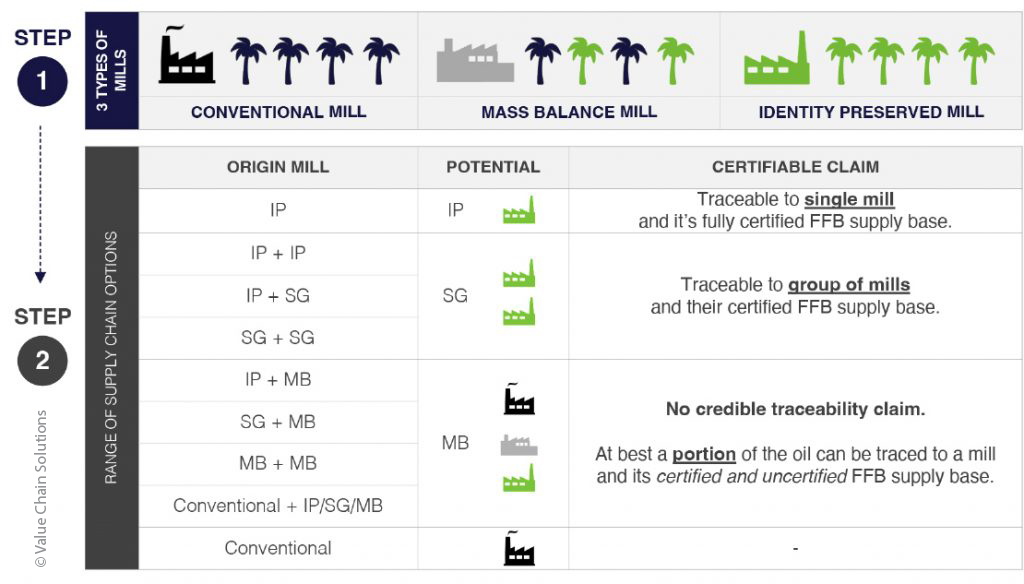
TRACEABILITY TO FARM
SUPPLY CHAIN CERTIFICATION SYSTEM (SCCS)
There are two major independent standards (RSPO and ISCC)
RSPO Roundtable of Sustainable Palm Oil.
ISCC International Sustainability and Carbon Certification.
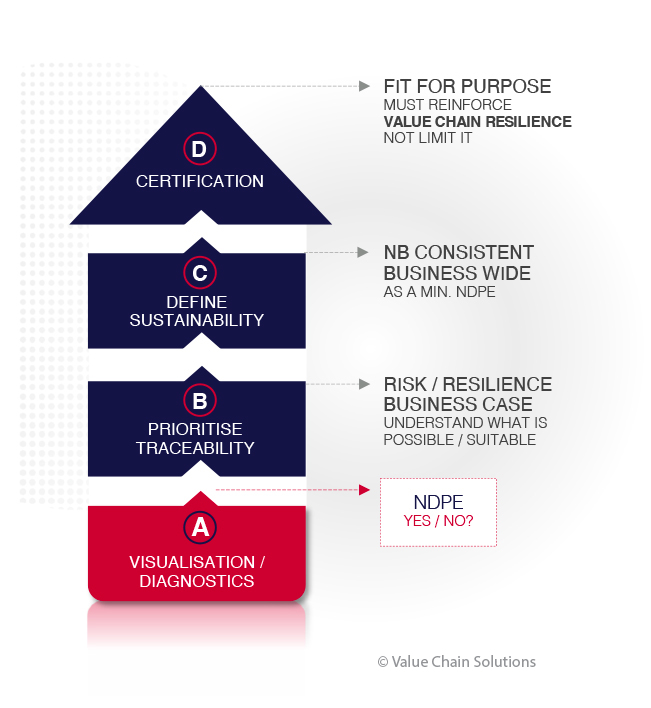
The blurred line between sustainability, traceability and certification is often confusing. That is why we need a roadmap.
THE SUSTAINABILITY JOURNEY AT A GLANCE:
DIAGNOSTICS & VALUE CHAIN VISUALISATION
We use our Virtuous Cycle (Our Approach) to unlock opportunities and value in the value chain. Three critical Lenses anchor and validate our recommendations, namely sustainability, competitiveness and risk. Step 1 of the Virtuous Cycle is Diagnostics & Value Chain Visualisation. The visualisation of the extended value chain’s key dynamics and diagnostics of relationships are the first two steps to unlock potential value for supply chain sustainability. We focus on establishing the fact base using our unique approach and toolsets.
Next, you have to make the NDPE decision.
Learn More About Diagnostics & Value Chain Visualisation here.
We use our Virtuous Cycle (Our Approach) to unlock opportunities and value in the value chain. Three critical Lenses anchor and validate our recommendations, namely sustainability, competitiveness and risk. Step 1 of the Virtuous Cycle is Diagnostics & Value Chain Visualisation. The visualisation of the extended value chain’s key dynamics and diagnostics of relationships are the first two steps to unlock potential value for supply chain sustainability. We focus on establishing the fact base using our unique approach and toolsets.
Next, you have to make the NDPE decision.
Learn More About Diagnostics & Value Chain Visualisation here.
PRIORITISE TRACEABILITY
Covid-19 pressures on supply chains have been driving strategic partnerships and value chain traceability/visibility. While it is largely driven by the Risk Lens, a new age of collaboration has dawned – powered by big data and big data processing capability.
Here it is important to understand what is possible and suitable and to build your strategy on that.
This will enable you to best mitigate and monetise risks on the road to resilience.
Once traceability has been sufficiently addressed, sustainability needs to be defined. A balanced and consistent business wide definition is important. Remember, ‘fully traceable’ and ‘certification’ do not necessarily mean ‘sustainable’. Plus, traceability should be able to enforce the definition of sustainability where it applies.
CERTIFICATION – THE FINAL, NOT THE FIRST STEP
Finally, there is certification – fit for purpose confirmation that reinforces value chain resilience.
We use cookies on our website to give you the most relevant experience by remembering your preferences and repeat visits. By clicking “Accept All”, you consent to the use of ALL the cookies. However, you may visit "Cookie Settings" to provide a controlled consent. Click here to read our Privacy Policy.
This website uses cookies to improve your experience while you navigate through the website. Out of these, the cookies that are categorized as necessary are stored on your browser as they are essential for the working of basic functionalities of the website. We also use third-party cookies that help us analyze and understand how you use this website. These cookies will be stored in your browser only with your consent. You also have the option to opt-out of these cookies. But opting out of some of these cookies may affect your browsing experience.
Necessary cookies are absolutely essential for the website to function properly. These cookies ensure basic functionalities and security features of the website, anonymously.
Cookie
Duration
Description
cookielawinfo-checkbox-analytics
11 months
This cookie is set by GDPR Cookie Consent plugin. The cookie is used to store the user consent for the cookies in the category "Analytics".
cookielawinfo-checkbox-functional
11 months
The cookie is set by GDPR cookie consent to record the user consent for the cookies in the category "Functional".
cookielawinfo-checkbox-necessary
11 months
This cookie is set by GDPR Cookie Consent plugin. The cookies is used to store the user consent for the cookies in the category "Necessary".
cookielawinfo-checkbox-others
11 months
This cookie is set by GDPR Cookie Consent plugin. The cookie is used to store the user consent for the cookies in the category "Other.
cookielawinfo-checkbox-performance
11 months
This cookie is set by GDPR Cookie Consent plugin. The cookie is used to store the user consent for the cookies in the category "Performance".
viewed_cookie_policy
11 months
The cookie is set by the GDPR Cookie Consent plugin and is used to store whether or not user has consented to the use of cookies. It does not store any personal data.
Functional cookies help to perform certain functionalities like sharing the content of the website on social media platforms, collect feedbacks, and other third-party features.
Performance cookies are used to understand and analyze the key performance indexes of the website which helps in delivering a better user experience for the visitors.
Analytical cookies are used to understand how visitors interact with the website. These cookies help provide information on metrics the number of visitors, bounce rate, traffic source, etc.