& SEEKING THE SAME VERSION OF THE TRUTH TO ADDRESS SUPPLY CHAIN VULNERABILITIES
Supply chain challenges are showing little sign of abating and vulnerabilities across food value chains are being exposed. New approaches and technology leverage are needed to avoid perpetual crises management. After all, the chain is only as strong as its weakest link.
AT A GLANCE
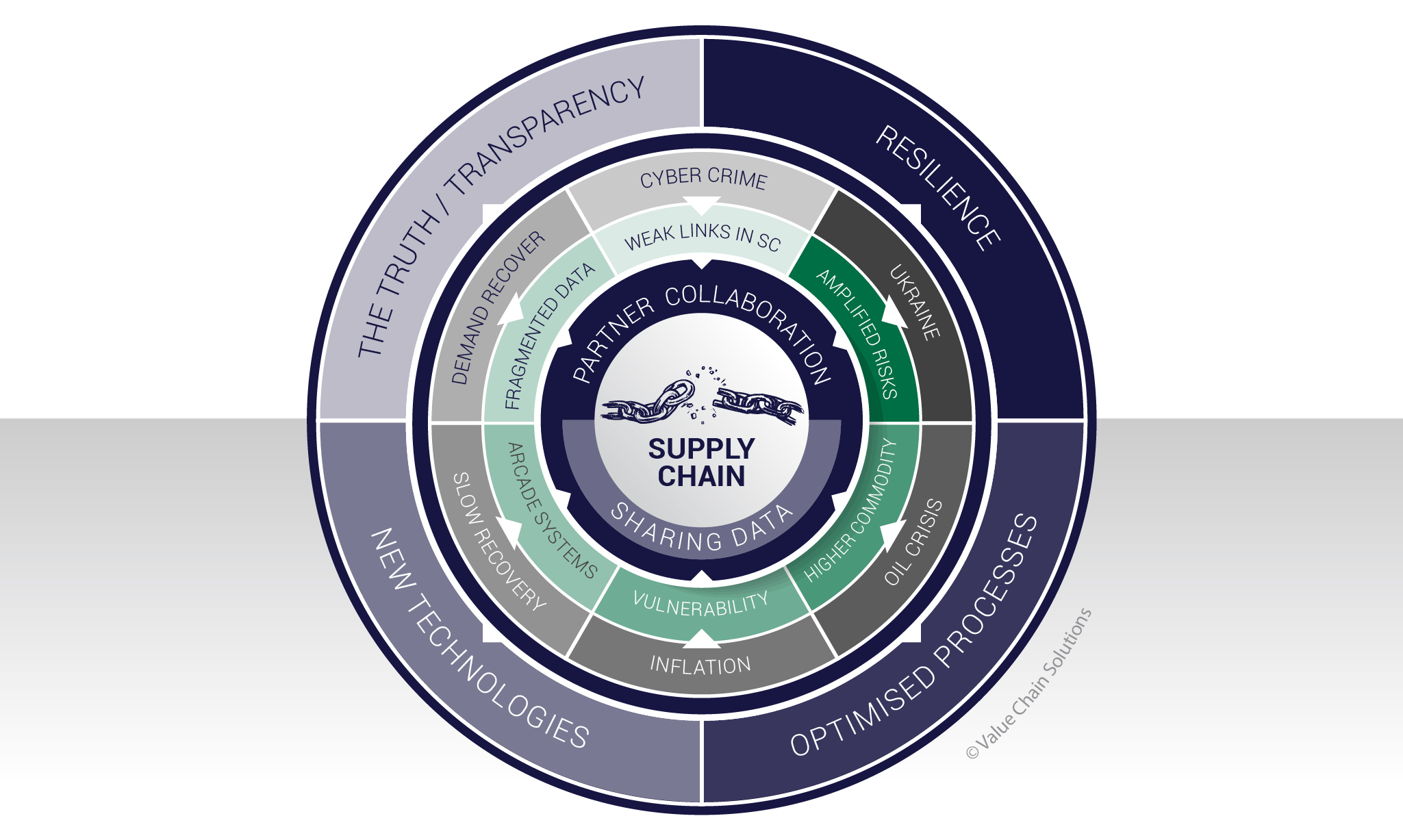
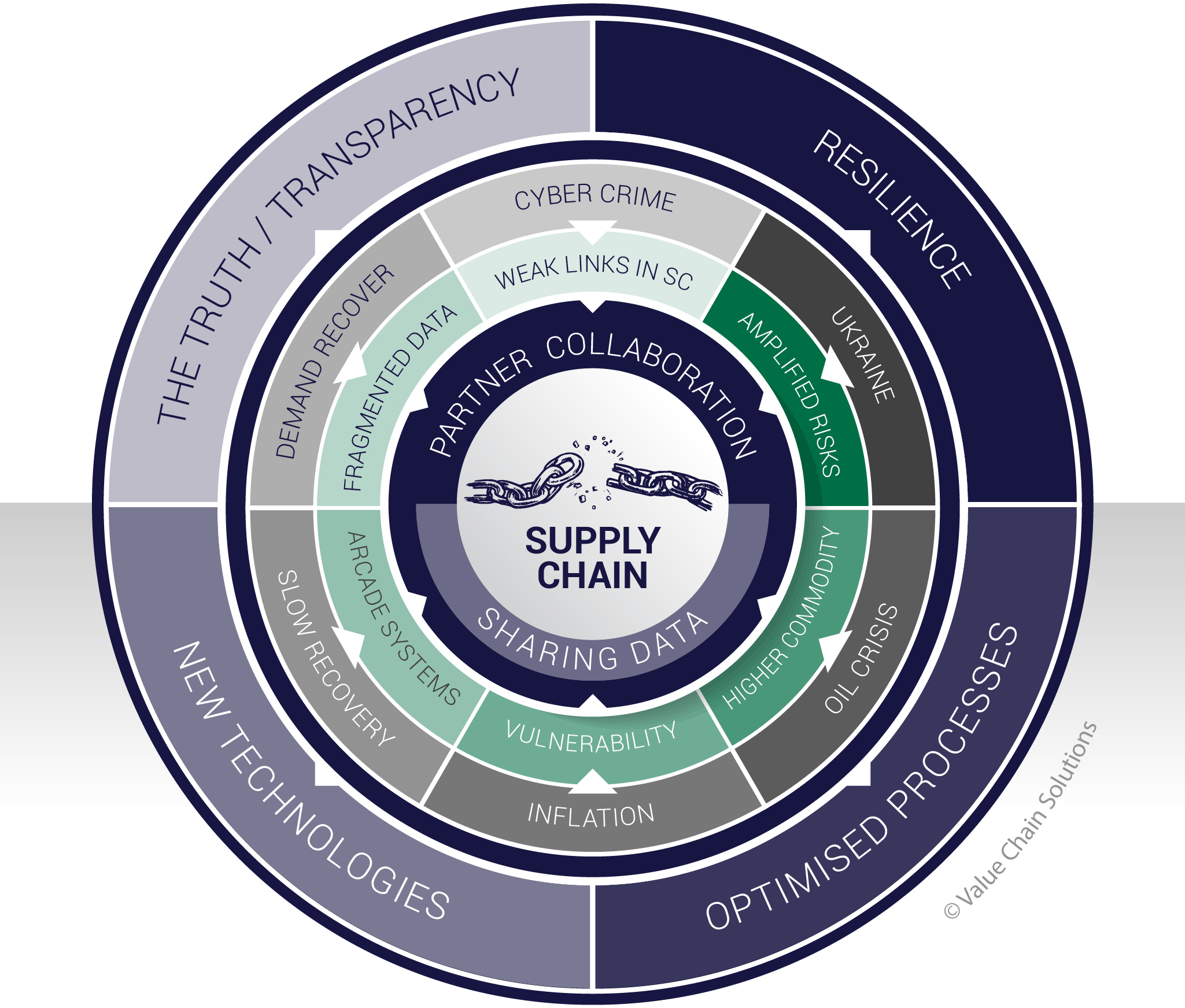
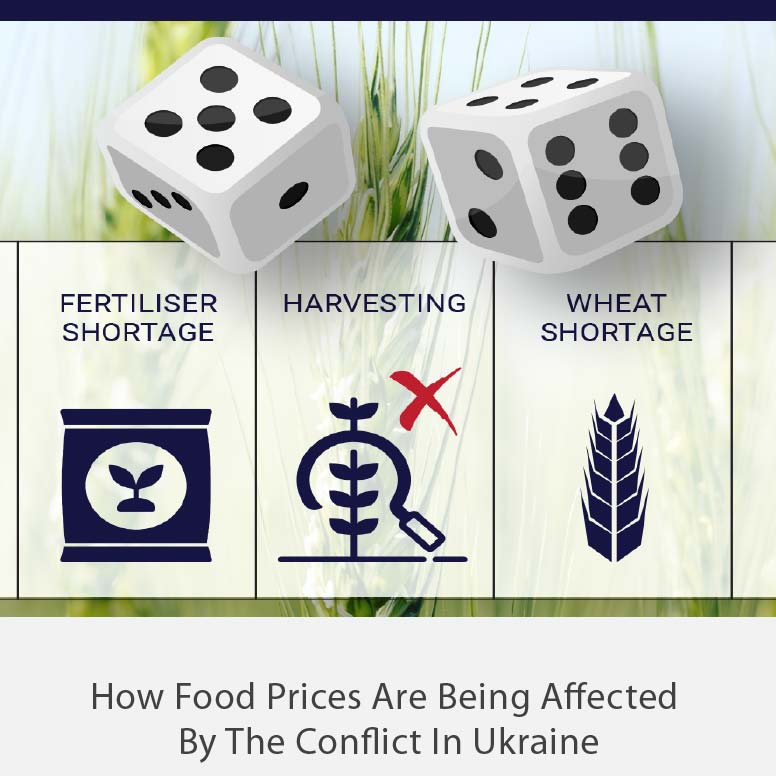
Supply chain challenges are mounting at global, regional and organisational levels, driven by a number of factors such as the slow recovery in demand, the ongoing conflict in Ukraine and its impact on the commodity and oil crisis. Trade patterns and protectionist policies are shifting and there is a growing trend towards localisation of sourcing and supply chains, coined nearshoring.
Given this changing reality, there is new urgency for organisations to understand and adapt mitigation strategies to deal with the vulnerabilities in the full ecosystem within which they operate. It is clear that more diverse resilience strategies and more collaborative approaches across the value chain are needed.
AT VALUE CHAIN SOLUTIONS, WE SUPPORT FACT-BASED COLLABORATION BETWEEN VALUE CHAIN PARTNERS BY LEVERAGING DATA AND ENABLING THE REQUIRED VALUE CHAIN OPTIMISATION PROCESSES WHICH ALLOW PARTNERS TO ENGAGE ON THE SAME FACTS AND DATA.
AT VALUE CHAIN SOLUTIONS, WE SUPPORT FACT-BASED COLLABORATION BETWEEN VALUE CHAIN PARTNERS BY LEVERAGING DATA AND ENABLING THE REQUIRED VALUE CHAIN OPTIMISATION PROCESSES WHICH ALLOW PARTNERS TO ENGAGE ON THE SAME FACTS AND DATA.
THE CHALLENGE
Collaboration requires taking risks when it comes to sharing information with partners. Often these perceived risks prevent partners from uncovering the threats to resilience, meaning they often only surface in response to a crisis.
A NEW LEVEL OF TRUST IS REQUIRED TO BRIDGE THESE CHALLENGES.
Secondly, rapid advances in technology and digitisation are exposing economies and businesses to a diverse set of cybercrimes. When organisations are forced to rapidly implement technology in response to crisis and without due process, these risks are amplified.
THE OPPORTUNITY
Strategic and transparent partnerships can kickstart innovative and proactive interventions, leading to a common view of the vulnerabilities and opportunities within the extended value chain. It will require a shift in culture, but the prize is worth it.
The rapid advances in processing power and cloud computing allows us to generate insights which make sense of large, fragmented data sets that abound in extended value chains. Deploying powerful algorithms and enabling insights advance the joint understanding of risks and key elements that require collaborative action.
HOW CAN A DATA- AND INSIGHTS-DRIVEN VALUE CHAIN HELP IMPROVE RESILIENCE PLANS?
By harnessing existing and new data and new technologies, value chain partners can transfer knowledge and create opportunities that lead to improvement and advancement.
Using data to improve a value chain begins with taking full advantage of the data a company and its partners already hold and augmenting that with external reference data sets to drive the required insights. Gaps such as processing waste and bottlenecks, rigid product specifications and overexposure to certain sourcing areas are exposed.
WHERE AND HOW VALUE CHAIN SOLUTIONS CAN HELP
We assist actors at and between any point in the value chain (at consumer level, processing, primary production, etc.) to integrate fragmented data and to drive various insights from it. This enables ongoing optimisation and collaboration.
Our Virtuous Cycle approach is the key to identifying and resolving bottlenecks and unlocking opportunities and value in the value chain, through data-driven solutions.
VIRTUOUS CYCLE STEPS
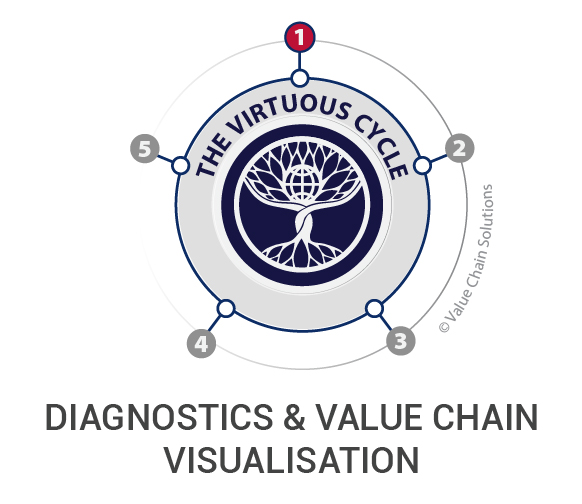
The [a] visualisation of the extended value chain’s key dynamics (all the key inputs and relevant markets impacting the end-to-end supply chain) and [b] diagnostics of relationships, are the first two steps to unlock potential value for supply chain sustainability. A complete view of the value chain can, for example, help one see and understand potential areas of risk or inefficiency by generating focused insights from fragmented relationships and unstructured data.
The [a] visualisation of the extended value chain’s key dynamics (all the key inputs and relevant markets impacting the end-to-end supply chain) and [b] diagnostics of relationships, are the first two steps to unlock potential value for supply chain sustainability. A complete view of the value chain can, for example, help one see and understand potential areas of risk or inefficiency by generating focused insights from fragmented relationships and unstructured data.
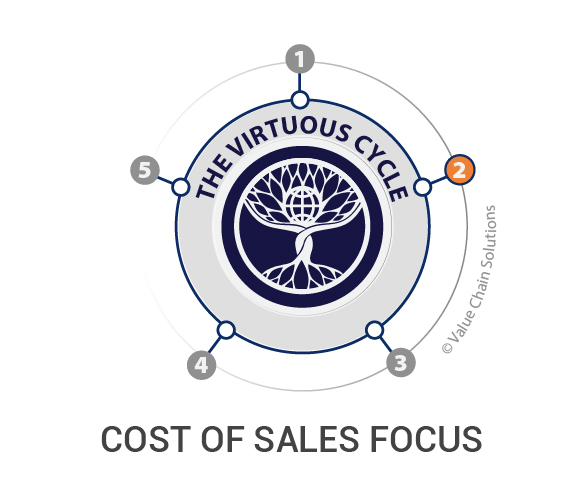
The cost base requires a continuous rethink and reengineering to protect and grow gross margin as well as market share. We focus on value chain reengineering – as opposed to cost cutting – to drive sustainable profitability, whilst clearly considering value chain vulnerability and risk.
The cost base requires a continuous rethink and reengineering to protect and grow gross margin as well as market share. We focus on value chain reengineering – as opposed to cost cutting – to drive sustainable profitability, whilst clearly considering value chain vulnerability and risk.
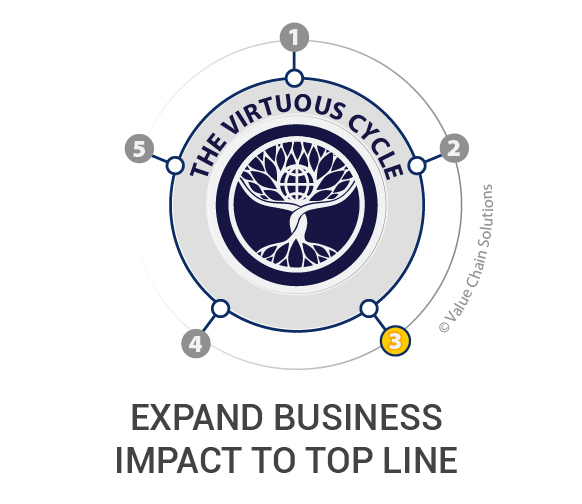
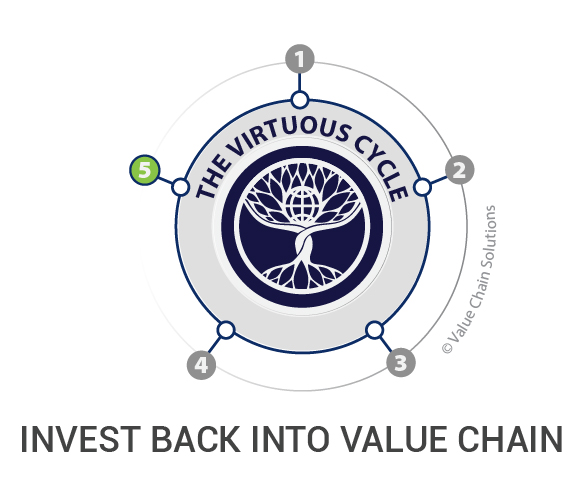
Investing extracted value chain efficiencies in the right place is essential to ensure maximum impact where it matters, promoting a competitive and resilient value chain in turn.
Investing extracted value chain efficiencies in the right place is essential to ensure maximum impact where it matters, promoting a competitive and resilient value chain in turn.
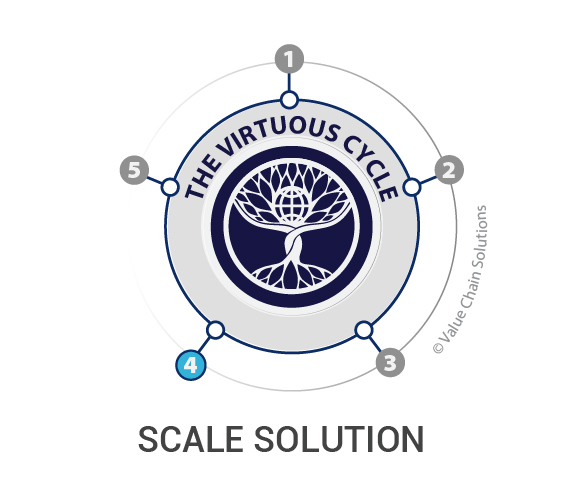
Our solution offers continued decision augmentation and value chain visibility which ensure value chains can be managed and scaled in a manner to multiply value benefits across the business. For example, pivoting across multiple product categories and/or suppliers.
Our solution offers continued decision augmentation and value chain visibility which ensure value chains can be managed and scaled in a manner to multiply value benefits across the business. For example, pivoting across multiple product categories and/or suppliers.
Data-driven, smart investment within the value chain – that will set up the next round of reengineering and make a tangible difference – is required to leverage the power of the virtuous cycle.
Data-driven, smart investment within the value chain – that will set up the next round of reengineering and make a tangible difference – is required to leverage the power of the virtuous cycle.
CONCLUSION
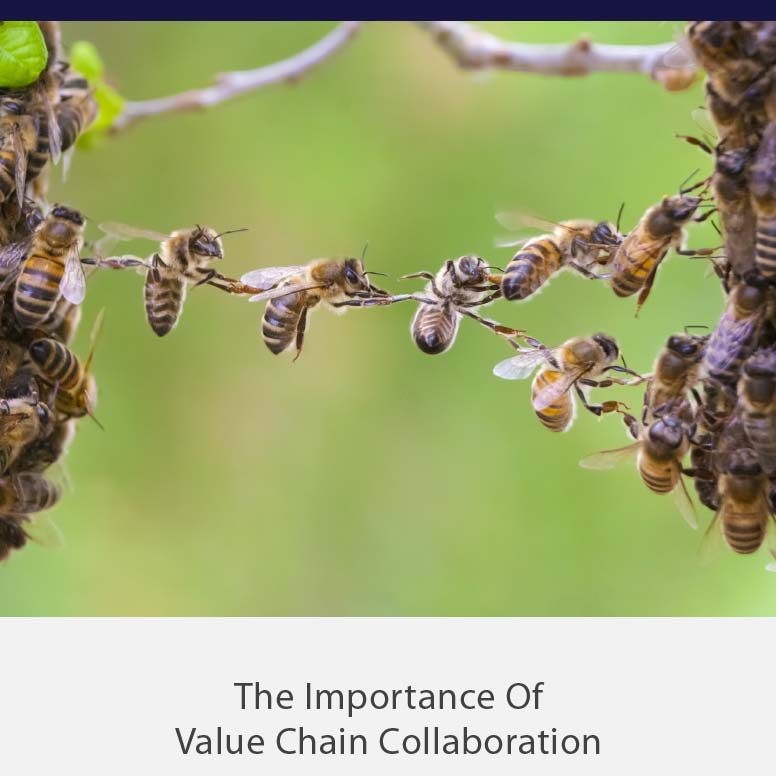
Value chain collaboration, using a fact-based approach, is a unique way to ensure more diverse resilience strategies which involve value chain partners beyond a single organisation. It requires a culture change and new way of dealing with partners, but the prize is worth the effort.
Value chain collaboration, using a fact-based approach, is a unique way to ensure more diverse resilience strategies which involve value chain partners beyond a single organisation. It requires a culture change and new way of dealing with partners, but the prize is worth the effort.
We use cookies on our website to give you the most relevant experience by remembering your preferences and repeat visits. By clicking “Accept All”, you consent to the use of ALL the cookies. However, you may visit "Cookie Settings" to provide a controlled consent. Click here to read our Privacy Policy.
This website uses cookies to improve your experience while you navigate through the website. Out of these, the cookies that are categorized as necessary are stored on your browser as they are essential for the working of basic functionalities of the website. We also use third-party cookies that help us analyze and understand how you use this website. These cookies will be stored in your browser only with your consent. You also have the option to opt-out of these cookies. But opting out of some of these cookies may affect your browsing experience.
Necessary cookies are absolutely essential for the website to function properly. These cookies ensure basic functionalities and security features of the website, anonymously.
Cookie
Duration
Description
cookielawinfo-checkbox-analytics
11 months
This cookie is set by GDPR Cookie Consent plugin. The cookie is used to store the user consent for the cookies in the category "Analytics".
cookielawinfo-checkbox-functional
11 months
The cookie is set by GDPR cookie consent to record the user consent for the cookies in the category "Functional".
cookielawinfo-checkbox-necessary
11 months
This cookie is set by GDPR Cookie Consent plugin. The cookies is used to store the user consent for the cookies in the category "Necessary".
cookielawinfo-checkbox-others
11 months
This cookie is set by GDPR Cookie Consent plugin. The cookie is used to store the user consent for the cookies in the category "Other.
cookielawinfo-checkbox-performance
11 months
This cookie is set by GDPR Cookie Consent plugin. The cookie is used to store the user consent for the cookies in the category "Performance".
viewed_cookie_policy
11 months
The cookie is set by the GDPR Cookie Consent plugin and is used to store whether or not user has consented to the use of cookies. It does not store any personal data.
Functional cookies help to perform certain functionalities like sharing the content of the website on social media platforms, collect feedbacks, and other third-party features.
Performance cookies are used to understand and analyze the key performance indexes of the website which helps in delivering a better user experience for the visitors.
Analytical cookies are used to understand how visitors interact with the website. These cookies help provide information on metrics the number of visitors, bounce rate, traffic source, etc.